
Understanding the Role of Low-Voltage Advisors
On commercial projects in the Chicago metro area, low-voltage scope rarely fails because the technology is “complicated.” It fails because it’s planned too late—after core-and-shell decisions are set, ceilings are locked, and MEP rough-in is underway. That’s when teams discover there’s no clean path for backbone cabling, telecom rooms are undersized or poorly located, Wi‑Fi can’t hit coverage targets, and security/AV runs into architectural or electrical conflicts.
A low-voltage technology advisor is the person who keeps the building’s communications and security infrastructure from becoming a change-order problem. When they’re brought in early—during programming, schematic design, and design development—they help the owner, architect, and GC make infrastructure-first decisions that support operations and tenants from day one.
What is a low-voltage technology advisor?
A low-voltage technology advisor plans and coordinates the building systems that run on low voltage and depend on pathways, spaces, and power coordination—typically:
Structured cabling (copper and fiber optics) and network infrastructure
Wi‑Fi infrastructure (access point locations, backhaul, switching, and coverage strategy)
Access control and door hardware coordination
Video surveillance (CCTV) and camera coverage design
AV and collaboration spaces (conference rooms, training rooms, digital signage)
Technology power requirements coordination (IT loads, UPS, rack power, and grounding/bonding)
The advisor’s value is practical: making sure the drawings, bid sets, and field installation sequencing support real-world routing, device locations, and commissioning—without last-minute surprises.

Why early technology planning matters (and what it prevents)
Low-voltage work lives and dies by space (telecom rooms), pathways (conduit, sleeves, trays), and coordination (doors, ceilings, power, and finishes). When those items aren’t designed early, teams pay for it later in rework, schedule hits, and change orders.
Early involvement helps prevent common field issues such as:
Missed pathways through concrete, steel, demising walls, and fire-rated assemblies
Undersized conduit and overcrowded sleeves that can’t support backbone fiber, additional drops, or future growth
Poor MDF/IDF placement that creates long cable runs, bad service access, heat issues, or conflicts with tenant layouts
Wi‑Fi coverage problems caused by late AP placement, ceiling constraints, and RF-unfriendly materials
Access control conflicts with door hardware, mullions, glazing, fire ratings, and egress requirements
Camera blind spots due to late camera selection, mounting heights, lighting conditions, or sightline obstructions
AV limitations when power/data, conduit, and backing aren’t coordinated for displays, ceiling mics, speakers, and control locations
Costly change orders from “add it later” decisions that turn into coring, patching, ceiling rework, and schedule impacts
MDF/IDF planning: location, size, and build-out details
Telecom rooms are not a leftover closet. On both new construction and tenant improvement (TI) projects, the advisor helps define:
MDF/IDF locations that make sense for the floor plate, riser strategy, and service access
Room sizing for racks/cabinets, ladder rack/cable tray, and clearances (front/rear working space)
Cooling and ventilation coordination (IT rooms that overheat become reliability problems)
Power and UPS planning (dedicated circuits, rack PDUs, critical loads, and shutdown strategy)
Grounding/bonding coordination so the infrastructure is stable and code-compliant
In Chicago-area buildings—especially high-rises and concrete/steel structures—telecom-room placement and riser strategy need to be decided early because late changes can mean coring, firestopping rework, and major labor impacts.

Pathways and conduit: the difference between a clean install and a change order
Most low-voltage headaches are pathway headaches. If pathways are missed or undersized, crews are forced into expensive workarounds: surface raceway, exposed runs, additional sleeves, or re-routing around finished work.
An advisor helps the team plan a practical pathway strategy, including:
Backbone routes (fiber and copper) from service entrance to MDF, then to IDFs and critical spaces
Conduit sizing that accounts for fill, bend radius, spare capacity, and future additions
Cable tray/ladder rack layouts that coordinate with structure, ductwork, and ceilings
Sleeves and penetrations coordinated early so they’re installed before walls are closed and ceilings go in
Firestopping coordination so penetrations aren’t discovered after inspections or turnover pressure
Wi‑Fi coverage: plan it like infrastructure, not a device list
Wi‑Fi coverage issues are rarely solved by “adding one more access point” at the end. The advisor can drive early decisions that make coverage achievable without ugly installs or last-minute cabling:
Coordinate ceiling types, heights, and constraints (open ceiling, hard lid, specialty ceilings)
Plan AP density and placement based on use cases (office, warehouse, retail, healthcare, hospitality)
Identify RF challenges (concrete, metal deck, elevator cores, dense shelving, and reflective materials)
Ensure cabling routes and IDF placement support performance and maintainability
For TI projects, they also verify what can be reused and what can’t—so the team doesn’t assume existing cabling, switching, or pathways will support the new layout.
Access control coordination: doors, hardware, and life-safety conflicts
Access control is a coordination-heavy scope: readers, request-to-exit, contacts, electrified locks, door position switches, and power supplies all touch architectural openings and electrical rough-in. Early advisory involvement helps prevent:
Reader conflicts with glazing, mullions, and ADA mounting heights
Electrified hardware coordination misses (wrong hinge prep, no transfers, wrong lockset)
Power supply and cable routing issues (no space, no power, no pathway)
Late changes that trigger door and frame rework—one of the fastest ways to burn schedule and money
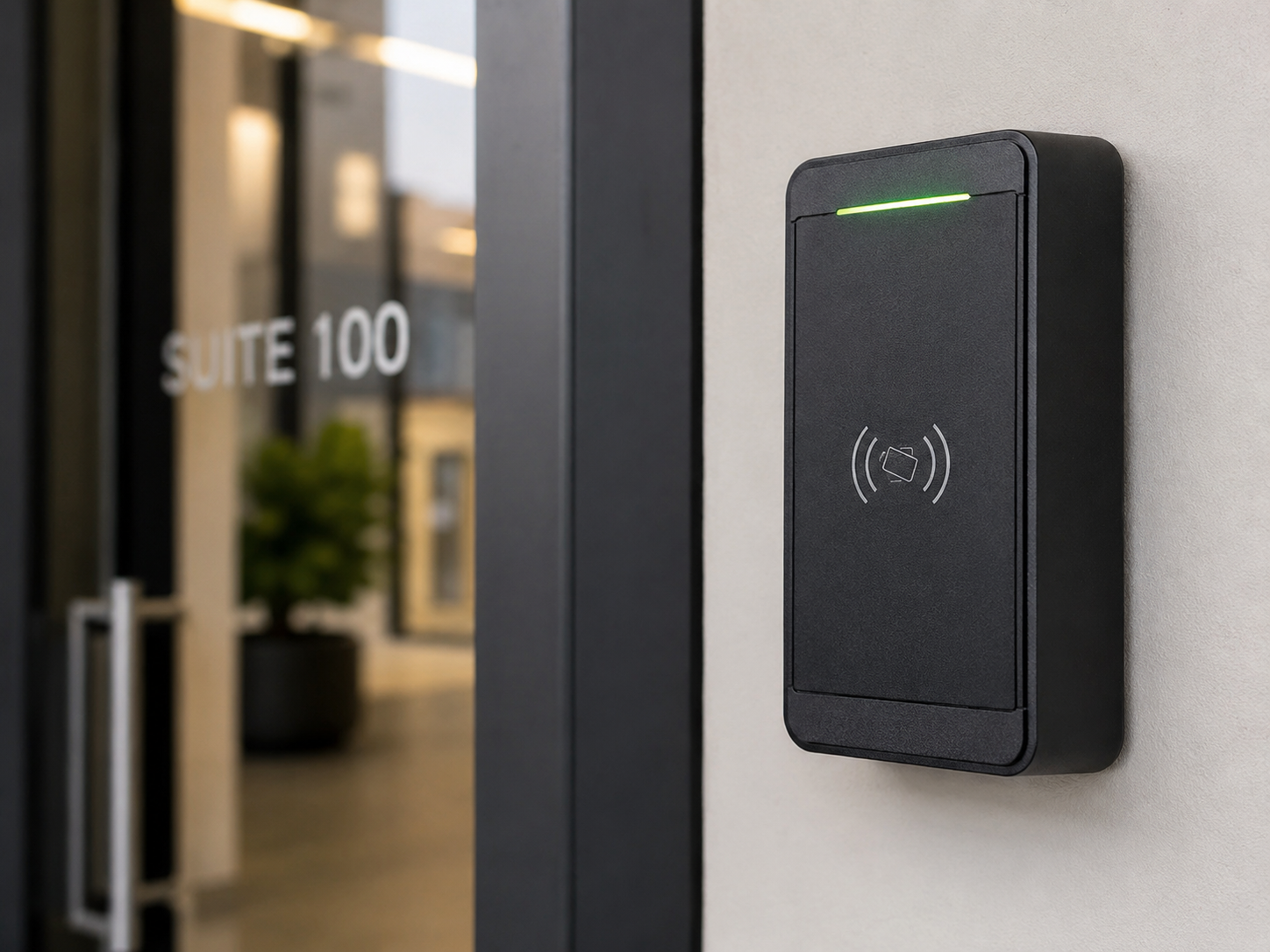


Access control coordination: doors, hardware, and life-safety conflicts
Access control is a coordination-heavy scope: readers, request-to-exit, contacts, electrified locks, door position switches, and power supplies all touch architectural openings and electrical rough-in. Early advisory involvement helps prevent:
Reader conflicts with glazing, mullions, and ADA mounting heights
Electrified hardware coordination misses (wrong hinge prep, no transfers, wrong lockset)
Power supply and cable routing issues (no space, no power, no pathway)
Late changes that trigger door and frame rework—one of the fastest ways to burn schedule and money
CCTV camera coverage: eliminate blind spots before the ceiling goes in
Camera blind spots are typically created in design—not during commissioning. Advisors help define coverage intent early (deterrence vs. identification), then coordinate:
Mounting heights and sightlines (avoiding columns, signage, lighting glare, and deep shadows)
Field of view, lens selection, and zones (entries, docks, cash-handling, corridors, parking)
Network and storage requirements (bandwidth, PoE budgets, NVR/VMS sizing)
Pathways so cameras don’t become surface-mounted after finishes are complete
AV and collaboration spaces: avoid “we can’t do that” at turnover
Conference rooms and training spaces are common punch-list traps when AV is left to the end. Early planning allows the team to coordinate:
Display locations with proper backing, power, and conduit for clean wall finishes
Table boxes and floor pathways before slab pours or floor finishes are set
Ceiling coordination for microphones, speakers, cameras, and occupancy sensors
Network drops and control locations so the room is supportable and scalable

Bid sets and construction clarity: tighter scope, fewer RFIs, fewer change orders
A big benefit of technology advisory services is producing clearer, buildable documentation. When low-voltage is well defined in the bid sets, you typically see:
Fewer RFIs about device locations, pathways, and room requirements
More apples-to-apples bids from installers (less guessing, fewer exclusions)
Cleaner coordination between trades (electrical, drywall, ceilings, doors/hardware, IT)
Reduced change-order exposure tied to coring, patching, and rework
Where the advisor fits in the timeline (new build and TI)
To get the most value, bring the advisor in before major architectural, structural, and MEP decisions are locked:
Programming / pre-design: define use cases, tenant needs, security posture, and performance targets
Schematic design: establish MDF/IDF strategy, risers, major pathways, and technology room needs
Design development: coordinate device layouts, conduit/tray, door hardware, and Wi‑Fi/coverage intent
Construction documents: tighten details so installation is buildable and biddable
Construction: support coordination, submittals, and field changes with minimal disruption
Conclusion: build the technology backbone first
For Chicago-area commercial builds and tenant improvements, early low-voltage planning is one of the most practical ways to protect the schedule and budget. A low-voltage technology advisor helps the team get pathways, telecom rooms, coverage, and coordination right the first time—so your network infrastructure, security, and AV systems install cleanly and perform as intended at turnover.