

Commercial Paging, PA & Break Bell Systems

Clear announcements. Practical control across your facility.

Paging, public address and scheduled break tones for Chicago-area businesses—planned around your building, work zones and daily routines.

Paging horn speaker mounted on a warehouse column overlooking storage racks and active work areas.

Everyday facility communication

Different messages need different coverage

Live paging and announcements

Plan routine announcements around the people and areas they need to reach. Review microphone or paging access locations, user workflows and whether announcements should go to one area, several zones or the whole facility.
Scheduled break and shift tones

Define start times, breaks, shift changes and the zones that should receive each tone. A useful plan also accounts for different workdays, schedule exceptions and who is responsible for making changes.

Commercial audio across separate spaces

Offices, work areas, break rooms and customer-facing spaces may need different volume levels or audio sources. Zone planning can help match the audio to each space while keeping routine operation understandable.

System planning

What the project may include

Coverage and zone planning

Identify announcement areas, separate workspaces and areas with different operating needs.

Speakers and supporting equipment

Review placement, mounting, amplification or network requirements for the proposed system.

Paging inputs and controls

Define how authorized staff make announcements and select destinations.

Scheduled tones

Establish the required schedules, exceptions and management process where supported by the selected system.

Cabling and network coordination

Plan routes, equipment locations, connections and applicable power requirements.

System checks and handoff

Agree on coverage checks, operating guidance, labeling and documentation.

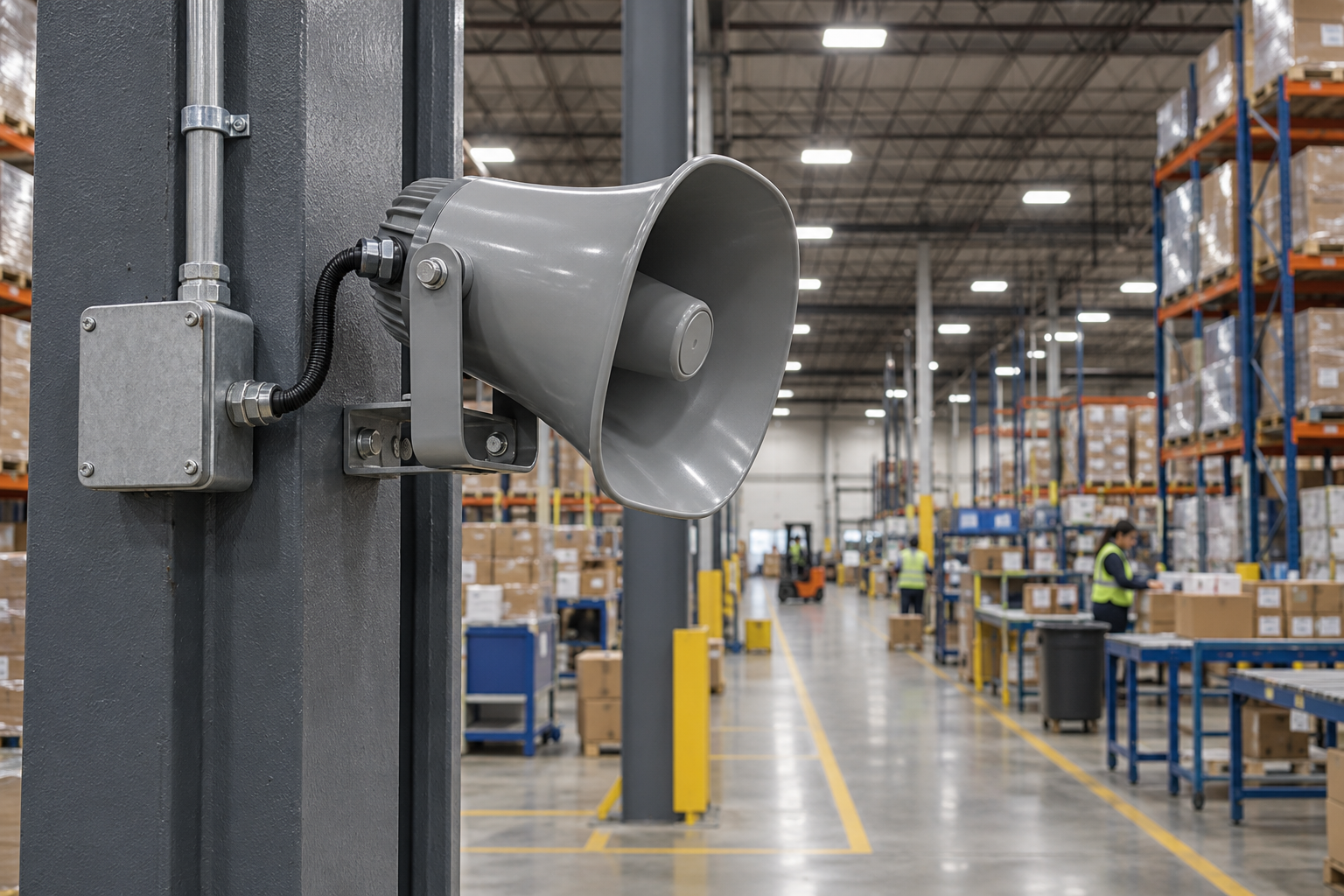
Warehouse paging horn mounted on a steel column with a junction box and neatly routed conduit.

Coverage that fits the space

Plan for intelligibility, not just volume

Noise, reflective surfaces, ceiling heights, obstructions and speaker placement affect how well people understand a message. Turning the volume up does not necessarily solve unclear coverage.

A facility review should consider normal operating conditions, the areas that are currently difficult to hear and how the building is divided. Speaker types, locations, coverage and control requirements can then be evaluated against that information.

Facilities we serve

Built around the facility’s daily routines

Warehouses and logistics

Consider separate coverage needs for aisles, loading areas, offices and shared employee spaces. Explore our warehouse infrastructure services.

Commercial offices and shared buildings

Consider staff announcements, common areas and local volume needs without making every area operate the same way.

Retail and restaurant spaces

Coordinate announcements and background audio with customer areas, staff spaces and operating hours. See our retail and restaurant services.

Connected infrastructure

Review the infrastructure before selecting equipment

Existing speakers, wiring and amplifiers may affect the upgrade path. Network-connected equipment may introduce dependencies on switches, power and IT configuration. Compatibility should be checked before assuming that existing components or telephone systems can be reused.

Apollo can coordinate the physical system with structured cabling, network hardware infrastructure and the wider commercial AV plan.

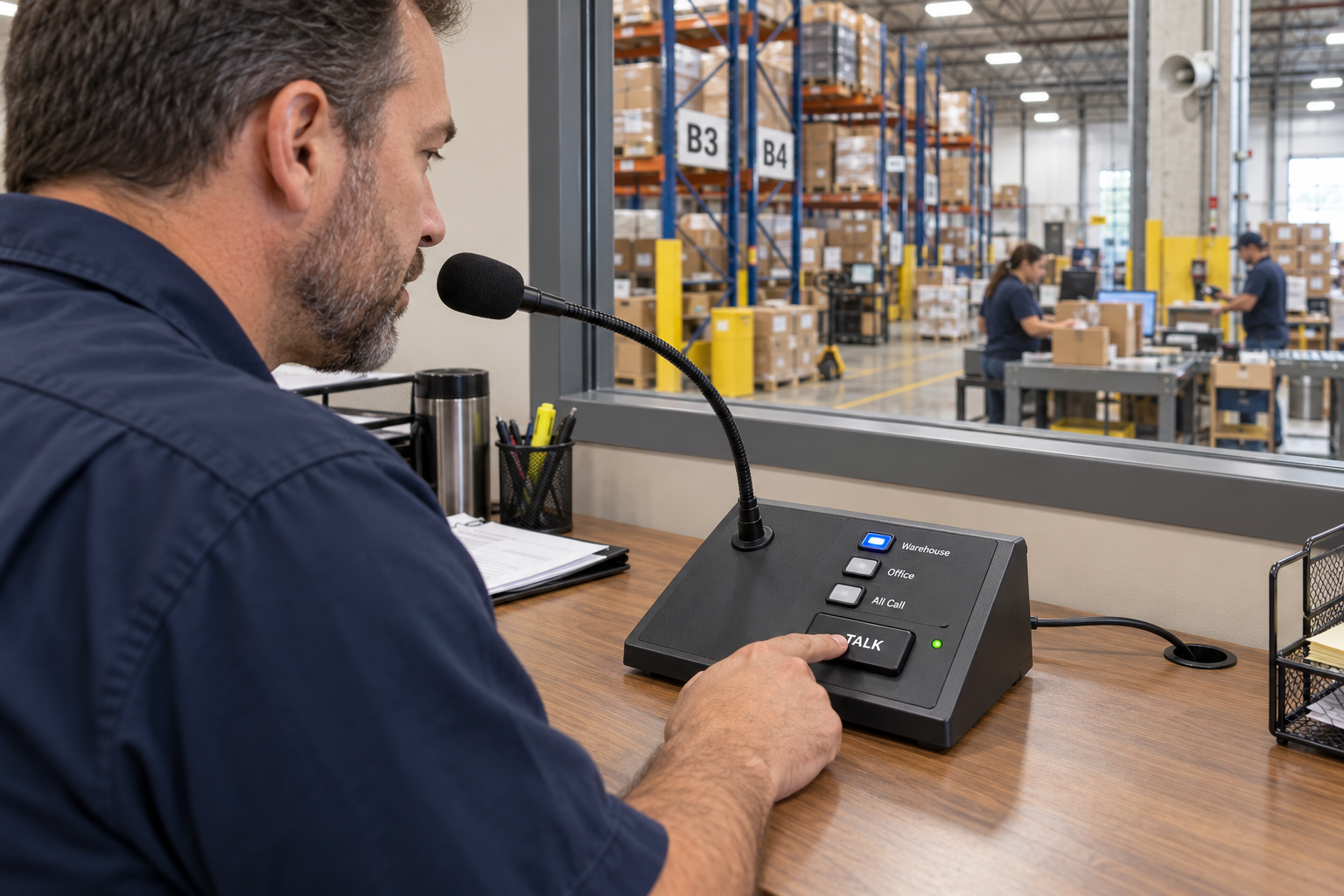
Staff member using a desktop paging microphone with warehouse, office and all-call zone controls.

Frequently asked questions

Paging and break bell questions

Can different areas receive different announcements?

Zone-based operation can be included in the system requirements. The number of zones, how they are selected and what can run independently depend on the selected equipment and installation design.

Can an existing paging system be expanded?

That depends on its condition, capacity, wiring and compatibility. A review can identify whether additional coverage is practical or whether part of the system needs replacement.

Can scheduled bells follow multiple shifts?

Multiple shifts and different daily schedules should be captured during planning. The proposed scheduling equipment must be checked against those requirements, including exceptions and override needs.

Is a routine paging system an emergency notification system?

Routine paging and break bells should not be assumed to meet fire alarm, evacuation or other regulated life-safety requirements. Any such requirement needs a separately defined scope and appropriate specialist coordination.

What information helps with an initial review?

Provide a floor plan, areas with poor coverage, normal noise conditions, existing equipment details and the announcements or schedules you need. Identify who will operate the system and where they work.

Next step

Make facility communication easier to manage.

Share where announcements are missed, which spaces need separate control and how your schedules work. Apollo can help define the next step for your paging or commercial audio project.