
Industrial & Manufacturing

Low-Voltage Infrastructure for Chicago-Area Manufacturing Facilities

Cabling, fiber, Wi-Fi, security and communication systems planned around your production floor, your people and the way your facility operates.

Manufacturing infrastructure

Plan technology around an active facility.

Production floors, shipping areas, offices and network rooms place different demands on the same building infrastructure. Apollo Technology & Cabling helps manufacturing facilities across Chicagoland and Northern Illinois plan and install the systems those spaces depend on.

Connectivity across changing spaces

Metal structures, equipment, storage and changing layouts can complicate wireless coverage. Identify where staff and devices need connections, how they move through the facility and which areas need closer assessment before choosing access point locations.
Communication where work happens

Background noise, ceiling height and separate work zones affect how announcements are heard. Paging and scheduled bell planning should follow actual work areas and shift patterns, with attention to coverage and intelligibility.

Infrastructure that can be serviced later

Unlabeled patching, crowded racks and undocumented changes make troubleshooting harder. Accessible equipment, clear labeling and organized pathways help your team understand what is installed and where it connects.

Built for change

Infrastructure for expansions, retrofits and everyday operations.

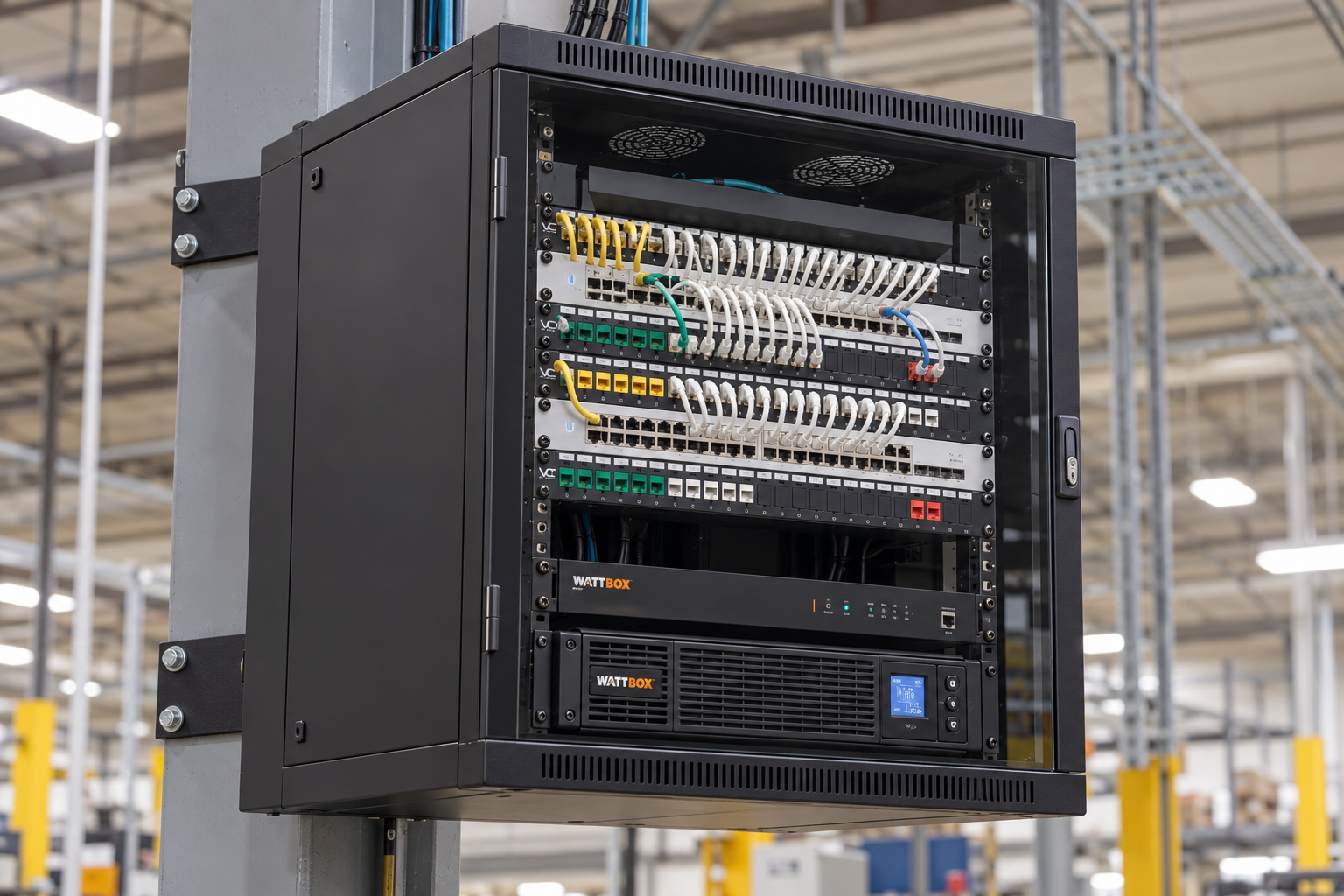
Network cabinet mounted to a manufacturing floor column, with patch panels, switches and neatly routed patch cables.

Facility expansions

Extend the backbone, pathways and system coverage into new areas while accounting for future changes.

Retrofits in occupied buildings

Review existing infrastructure, identify what can remain and coordinate installation access with facility operations.

Production and office changes

Plan new device locations, work areas, training spaces and connections before cabling is installed.

Infrastructure cleanup

Organize racks, patching and documentation so subsequent additions are easier to support.

Planning & coordination

Start with the building before selecting the equipment.

Review the operating schedule, existing infrastructure and installation constraints with the people who know the facility.

An equipment move, new production area or office renovation can affect several systems at once. Define routes, access requirements and responsibilities before work begins.

Explore technology advisement →
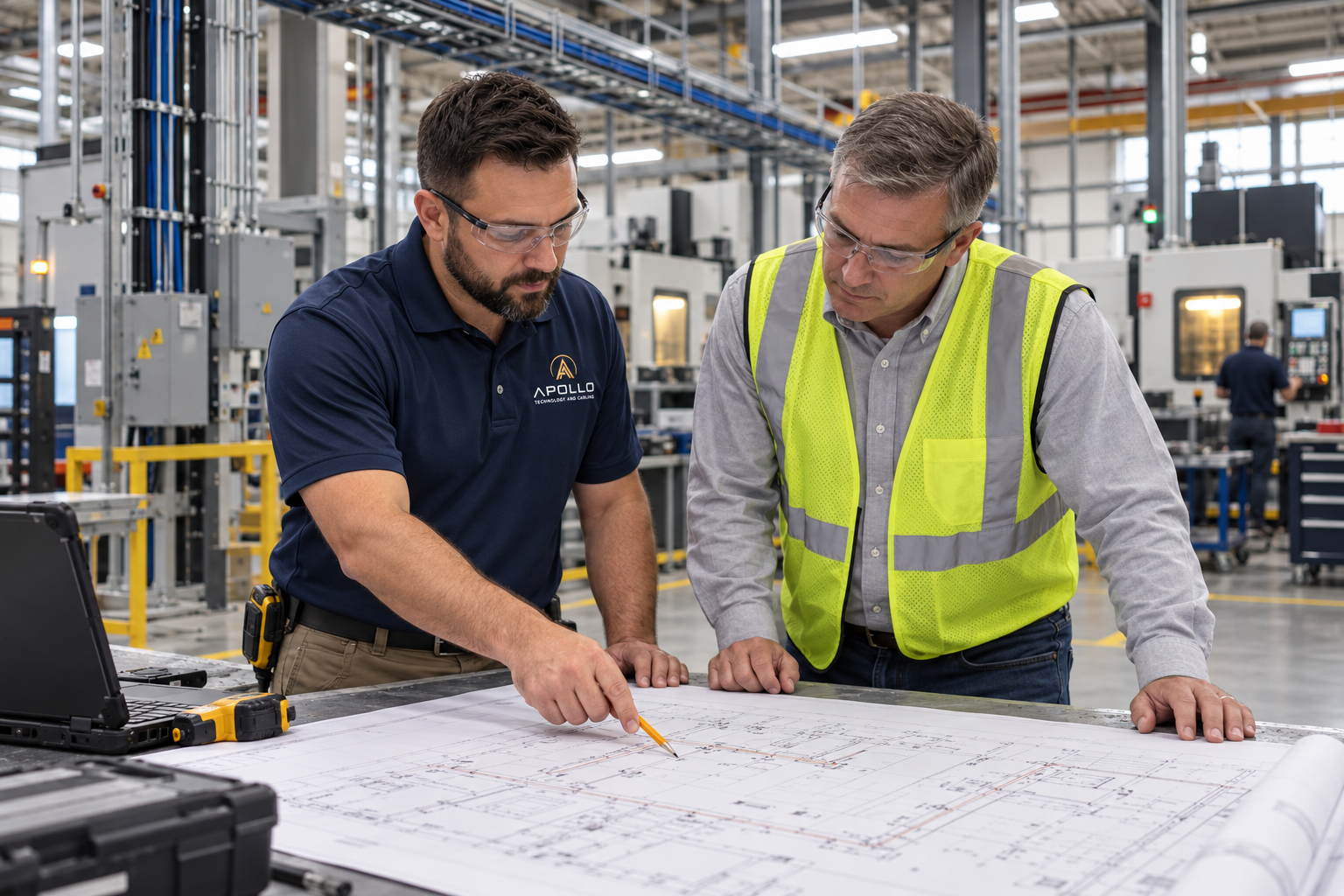
Two people reviewing installation plans on a manufacturing floor.

Production-floor planning

Define the connection, the route and the acceptance test.

Start with a list of machines, operator stations, inspection cameras, access points and displays. Confirm the required connection with each equipment owner. Building cabling, machine programming and safety controls need clearly assigned responsibilities.

Choose infrastructure for the environment

Review electrical noise, heat, moisture, vibration, impact exposure and service access. Select cable ratings, shielding and bonding requirements with the responsible design team. Fiber can support longer distribution links, but the optics, ports and terminations must match.

Plan an occupied-site cutover

Identify the equipment that must remain online, the approved interruption window and a rollback plan. Coordinate lifts, production traffic and access restrictions before crews arrive. Label retained connections before disconnecting or removing old infrastructure.

Specify the evidence at handoff

Agree on cable testing, endpoint labels, port schedules and cabinet documentation. Test the intended device or application with its owner. A link light alone does not establish cabling certification or prove the production workflow is ready.

Chicagoland industrial corridors

Local planning guides for different facility needs.

Facilities across the O’Hare corridor, western DuPage and the Fox Valley combine production, storage and shipping in different ways. Scope the work around your site rather than assuming that every industrial building needs the same system.

Planning work in Aurora, Montgomery, Naperville, Bolingbrook, Elk Grove Village, Wood Dale or nearby communities? Review our Chicago-area service coverage and discuss the building, scope and installation schedule with Apollo.

Our process

How a manufacturing project starts.

01

Review the facility

Discuss the problem, floor plan, operating hours, access restrictions and existing systems.

02

Define the scope

Identify system requirements, routes, mounting locations, network dependencies and work assigned to other trades.

03

Plan the installation

Coordinate access, sequencing and any required interruption windows before work begins.

04

Document the result

Agree on testing, labeling and handoff requirements as part of the project scope.

Frequently asked questions

Planning your manufacturing infrastructure project.

Can upgrades be planned around production schedules?

Installation timing and access requirements belong in the initial review. Phasing may be possible, but any required interruptions need to be identified and agreed upon for the specific project.

Is this the same as warehouse technology?

The systems overlap, but manufacturing adds production areas, equipment constraints and facility-specific installation requirements. For storage, picking and dock-focused projects, explore our warehouse and logistics services.

Can Apollo work with our IT provider and other contractors?

Apollo’s physical infrastructure scope can be coordinated with your IT provider, facility staff and other trades. Responsibilities for network configuration, electrical work and equipment connections should be defined before installation.

What should we bring to the first discussion?

A floor plan, a description of the affected areas, existing system information and your target schedule provide a useful starting point. Photos of network rooms and proposed installation areas can also help clarify the scope.

Next step

Start with a practical facility review.

Tell us what is changing, what is unreliable and where your team needs better connectivity, visibility or communication. Apollo can help identify a practical next step.